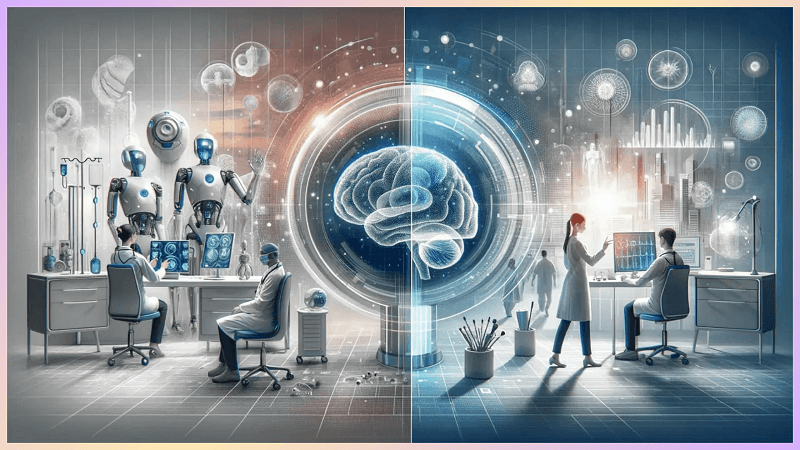

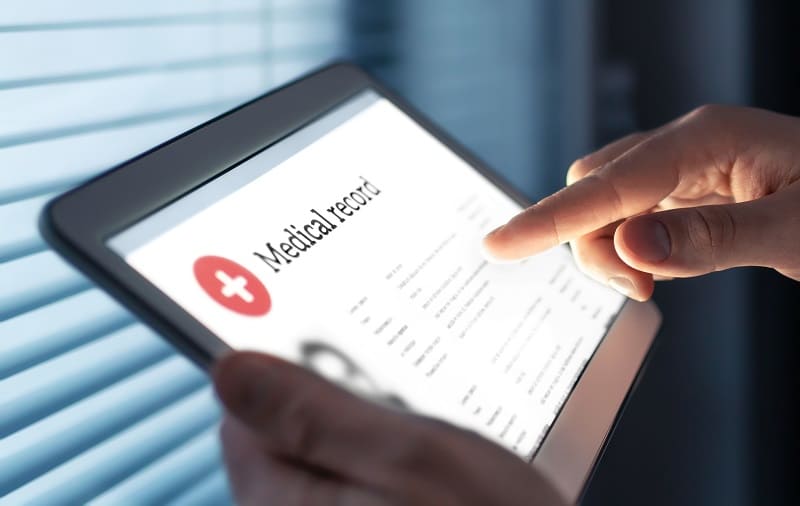
As science advances and diagnostic testing paves the way for real, accurate results to inform healthcare professionals and patients alike about their health, so advances the need to deliver more — more diagnostic lab testing, faster results without compromising accuracy — and all of this while in compliance with stringent regulations.
Electronic medical records (EMR) and electronic document management systems are becoming more prolific in healthcare settings. The expectation is that diagnostic labs will follow suit and integrate EMR and electronic document management systems into their facilities. This expectation isn’t a burden, however. The opposite is true; diagnostic labs can experience secure, seamless communication with healthcare providers, reduce the labor-intensive and often inaccurate or erroneous paperwork, improve patient care, and stay competitive, compliant, and communicative.
The Current Landscape of Diagnostic Labs
Diagnostic labs not already engaging in EMR and electronic document management typically experience similar operational challenges. They’re often reliant upon manual processes, which are time-consuming, slow, fraught with errors, delays, and come with an increased security risk with mishandled or unsecured data.
Often, diagnostic labs utilize independent software that digitizes information. While this is a step in the right direction, it is, in a sense, a data silo that does not offer the seamless communication that more robust electronic document management systems and integrated EMR offer. These data silos come at a cost: delays, security risks, and reliance on manual labor and internal staffing.
Patients are becoming more educated, more demanding, and more impatient, wanting test results quickly, accurately, and shared among their providers to expedite their care. With this higher demand for faster, more accurate diagnostics, integrated EMR and electronic document management systems are the solution that can help meet this demand.
Understanding EMR and Document Management Systems
In order to consider exactly how diagnostic labs can be changed with integrated EMR and electronic document management systems, it is imperative to understand just what they are and how they function. Integrating these data systems to be able to communicate with other providers is essential for success in the medical world today.
Electronic medical records are exactly what they sound like: they’re a digital version of an individual’s health records chart. The chart includes a patient’s history, test results for imaging and labs, diagnoses, treatment summaries, progress notes, visit dates, and more. The EMR helps providers track a patient’s history, especially over time, to help them identify trends, changes in conditions, and new information, whether it’s a diagnosis, condition, symptom, test result, etc. This allows the provider to give the patient the best care possible. When integrated, these records can be shared among approved providers, including diagnostic labs, allowing them to track specimens and communicate results instantly after the testing is complete.
Electronic document management systems are basically secure platforms that are used to store, organize, share, and essentially manage in every sense the data that is added to an EMR. In a diagnostic lab, this data could include everything from consent documents to insurance papers, other records like quality control documents, the actual test result records, compliance documentation, and more.
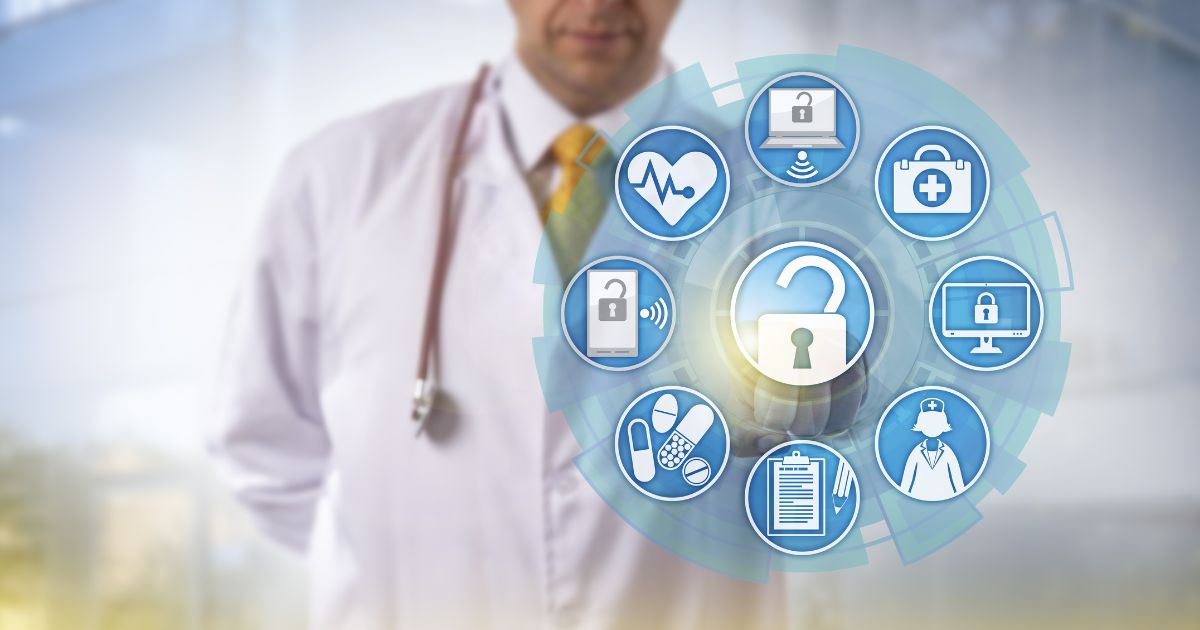
An EDMS makes storage and retrieval possible with the click of a button, versus going through stacks of files and then somehow transmitting that information to a different location. The time reduction is mind-blowingly fast, comparatively. Additionally, it ensures data security, compliance with regulations, that audit trails are accessible, and streamlines controlled access.
Benefits of Integration
In understanding how EMR and EMDS work, the benefits become clear. For diagnostic labs specifically, workflows become streamlined, and there is a reduced need for manual data entry, especially as information like patient demographics, insurance, and medical record or patient identification information will be shared between providers. There is proven data that shows that EDMS can help improve efficiencies in labs.
Additionally, testing and result reporting can be automated. Turnaround time is significantly reduced, and there is a reduced risk of human error, which is huge, especially when it comes to diagnostic processes, especially with pathology, imaging, and clinical testing. Nothing could be worse than a patient receiving the wrong results, and an integrated EMR helps to reduce or completely eliminate that from happening.
With a reduction in turnaround time, requisitions, reports, and supporting documents are available to the diagnostic lab and the referring physician. It opens the lines of communication and facilitates better coordination, and the patient experiences better care. They know results, diagnoses, treatment plans, and more faster, which in some cases can be critical in life or death situations or when time matters.
Furthermore, EMR and EDMS improve accuracy, compliance, and data security because audits can be done faster, compliance can be traced, which makes it easier to meet the healthcare compliance requirements, including HIPAA, CLIA, and GDPR.
Steps To Successful Implementation
While EMR and EDMS are essentially data solutions, it’s not as simple as buying a piece of software and hitting upload on a computer. If your diagnostic lab is considering implementing an integrated EMR and electronic document management system, it is important to carefully consider your technology partner.
Ensuring that the tech provider cares about compliance, putting it at the forefront of operations, is critical, as noncompliance can result in fines, legal ramifications, and major issues for the lab, and that is if it can survive a major regulatory infraction. Finding a partner that communicates well, listens to your diagnostic lab’s particular needs, and works to address them is critical for success.
Once a partner has been selected, the current systems need to be carefully evaluated to understand what work is needed, what systems are in place and that work well, what hardware needs to be upgraded, where there are technology or workflow gaps, and more. A full evaluation is necessary to ensure the best fit.
While most of the newer EMR and EDMS products available are fairly user-friendly and intuitive, training and change management need to be in place to ensure a seamless transition.
Frequently Asked Questions
Q: What is an EMR system, and how is it used in diagnostic labs?
A: An Electronic Medical Records (EMR) system is a digital version of a patient’s health chart. In diagnostic labs, EMRs allow for instant access to patient history, test requisitions, and results, improving accuracy and communication with healthcare providers.
Q: What is an electronic document management system (EDMS)?
A: An EDMS is a secure platform used to store, manage, and retrieve documents like consent forms, insurance details, test reports, and compliance records. It reduces manual paperwork, speeds up workflows, and supports regulatory compliance.
Q: What are the key benefits of integrating EMR and EDMS in diagnostic labs?
A: Key benefits include faster turnaround times, reduced manual errors, enhanced data security, streamlined workflows, improved compliance with healthcare regulations, and better coordination with healthcare providers.
Q: How does EMR integration reduce errors in diagnostic testing?
A: By automating data sharing and entry, EMR integration minimizes human error in test ordering and reporting, ensuring results are accurate and delivered to the correct provider without delays.
Q: Is it difficult to implement EMR and EDMS in an existing lab?
A: Implementation requires selecting the right technology partner, evaluating current systems, updating hardware as needed, and training staff. While it takes planning, the long-term benefits far outweigh the initial effort.
Transform Your Diagnostic Lab
If your independent or diagnostic lab is ready to move forward with revolutionary technology that will set the lab up for success today and in the future, contact Credence Global Solutions. Experience secure, integrated electronic document management the way it should be done.